The Magic of Toy Rotation, and Your Quickstart Guide!

If you’re a parent you know how quickly toys can get out of hand. And maybe you’re wading through a sea of toys currently, feeling the burden of the plastic and clutter, the frustration of toy rooms looking like war zones. Not being able to take a step without being impaled by plastic pieces. Or are you at a loss for why your kids have hundreds of toys but won’t play with anything for longer than a few minutes? Well science has shown us kids do not do well with an overwhelming amount of choices. When all the toys are out all at once, not only does that make a huge mess BUT your child feels the chaotic energy. They are overwhelmed with choice and move from toy to toy rapidly. So what’s the fix? Toy Rotations!!

Rotating toys in small, manageable groups on a frequent basis takes away that feeling of overwhelm. The toys no longer appear hectic, and by giving them less you allow them the ability focus and play MORE. Less toys also boosts creativity, and has been shown to increase patience.

Besides the benefits your kids will get, YOUR life will also change mama!! Toy rotations will drastically improve the clutter and clean up when it comes to toys! We only put out 5-10% of the toys we own. Which means cleaning up takes less than 10 minutes. I have four baskets that hold some combination of vehicles, animals, constructing toys. The boys know each basket is for each thing and then it’s a simple as everyone grabbing a basket and picking up. The remaining items go on the second row of our toy shelf. This is a super manageable and approachable way for kids to clean up. No more feeling like “why bother” or taking an entire weekend to organize / clean your play room.

Where to start?

A starting point is to take inventory of the toys you have and loosely group them into genres. Then try to have one option from each genre available for your child to play with, the genres remain the same but the toys rotate. There is no single perfect way to rotate toys, it will depend on your child and interests and there are no rules when it comes to this. If you don’t have a ton of different vehicles or animals don’t feel like you suddenly have to go out and buy them… just split up the cars you put out and save the second batch for another rotation. Below is a loose frame work so you can get an idea of genres and toys, but it will look different for everyone based on what they have and kids interests.

Bigger Toys:

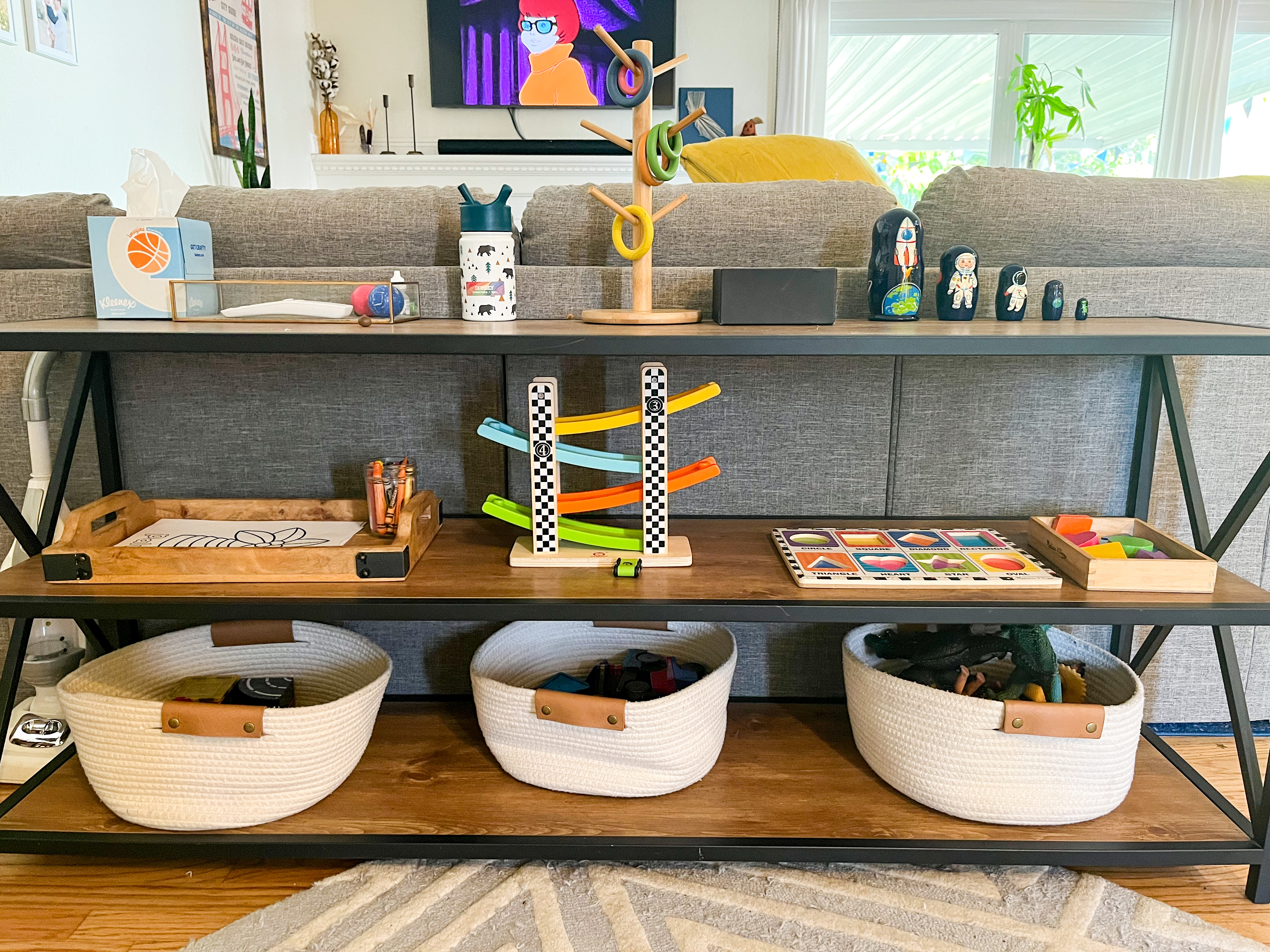
Things like a play kitchen that invites open ended and small world play are amazing & don’t have to rotate out. If there are toys that your children play with every.single.day don’t feel like you suddenly have to put them away for 3 weeks! For us there are a handful of toys we always have out: their pretend vacuum, guitars and a little bumblebee car they zoom around on. Those are the three things that are being used almost daily. Below is a picture of our actual toy space. In their rooms they don’t have any toys… Each boy has a basket of stuffed animals and a bookshelf.

Our actual toy space.

How often to rotate?

If the toys are off the shelf and on the ground in play you know your toy rotation is solid. When things start staying put on the shelf, switch it up. Or when items are being used for a completely different purpose (my kids in particular love to play “master disaster” and it’s where they just make a huge pile (read: mess) of their toys…. That’s usually a sign to me that they’ve lost interested in the toys that are out. When the dinosaurs make the switch from going on adventures to being part of the the master disaster it’s time to switch them out. That being said, rotating every 1-2 weeks is usually plenty. I will switch out puzzles more frequently because they may not hold interest for 1-2 weeks. The key here is to observe. Notice what your child is playing with or has lost interest in and adapt your rotation accordingly.

Where / how to store the toys?

Clear bins are my BFF for toy storage, I want to be able to see what is what so I can quickly switch toys out. Out of sight, out of reach, therefore out of mind, is best for toys not in rotation. At our old apartment I stored them in Wills closet which had a door. The boys closets in our new home are open, which does invite more pointing to toys from my two year old. But they are familiar with the fact that we rotate toys and if they really want something (I usually need to rotate anyway). Target has 6 packs of small bins for under $10 and i’ve used those to keep things organized. My goal for 2023 is to add more shelving to their closets.

Takeaways

  • There are no rules when it comes to toy rotations, so don’t get caught up on making it perfect.
  • Be clear to your kids that the toys are not being thrown away or going away forever. This should be a positive, fun experience. Frame it as creating a space for THEM to have the most fun and not to have to spend hours cleaning!
  • Categorize your toys the best you can & go from there. Remember to try to have a toy from each genre / category represented.
  • Enjoy the mental and physical space that removing toys will bring you.
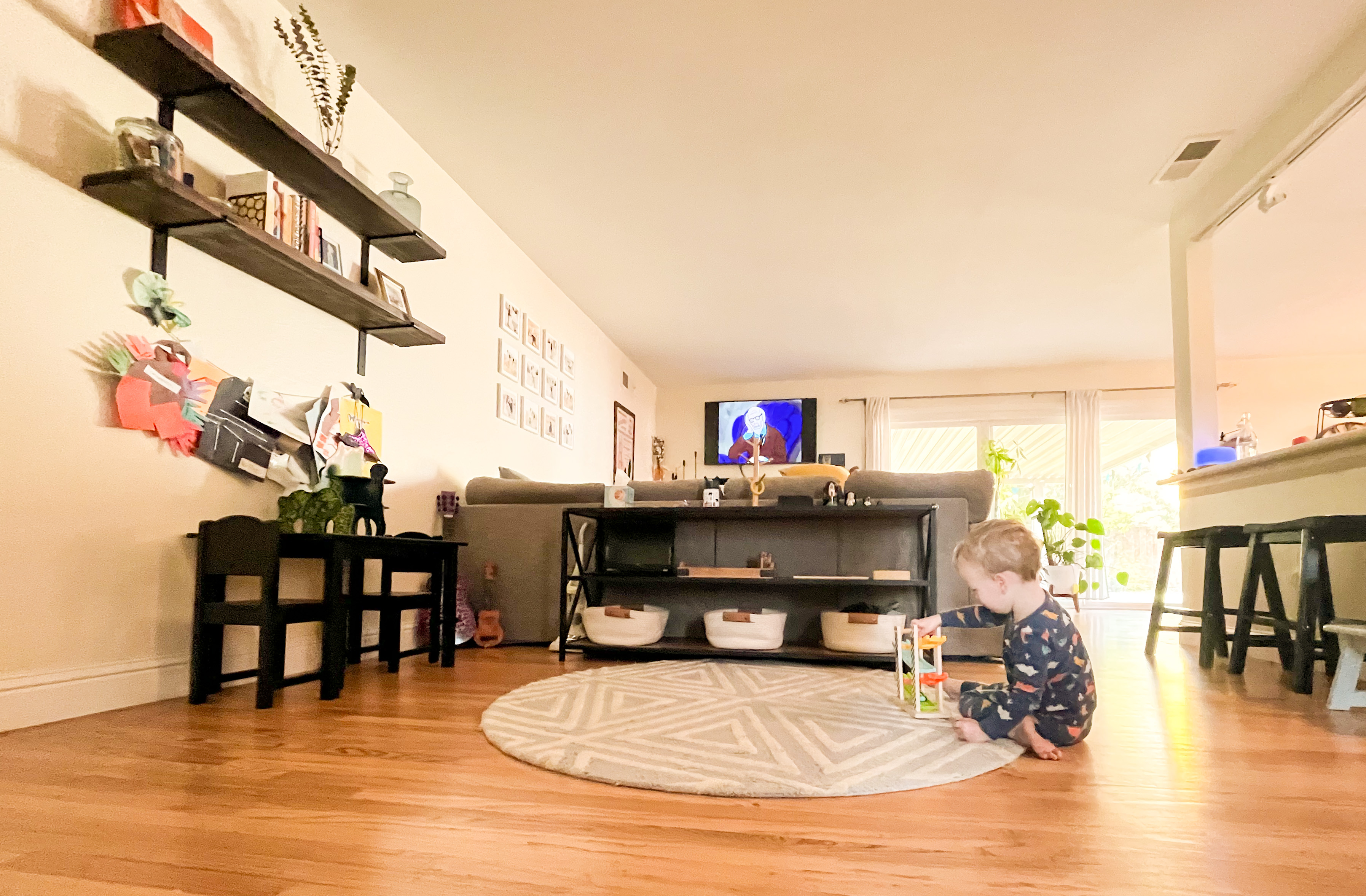
J enjoying a new rotation 🙂

Monday Mindset – The Power of Reframing.

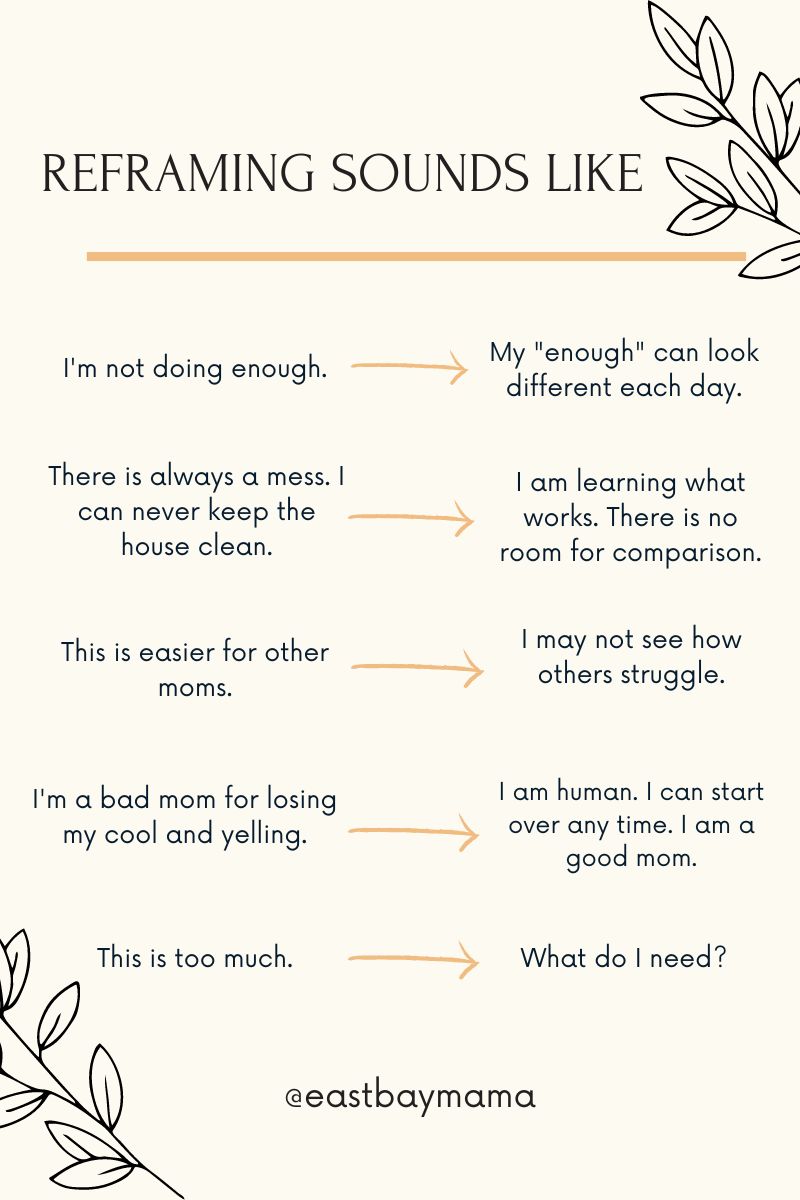
Reframing is the ability to change your life without actually changing your circumstances. It is a powerful shift that costs us nothing but can make a huge impact on our daily lives. This is not to say that you have to pretend sh*tty things are actually rainbows and blessings – that is toxic positivity. But instead considering things that we come across in our daily lives that we tell ourselves are problems or burdens. What mountains have we made out of molehills? What story are we perpetually telling ourselves? In theory reframing is great but IRL it can be harder to implement, especially if all you’ve known is to reflexively look at situations through a lens of criticism, blame or negativity. Below are some tips to actually make reframing something you can put into action versus just a far off concept that you’re never able to wrap your hands around!

Start finding the good – The harder you look for it the more you will find. The easiest and most effective way to start finding the good is something I’ve talked about before, gratitude. Simple gratitude lists will shift the way you see your day to day life and the more you do it the more powerful this practice becomes. It doesn’t have to be fancy or in-depth, keep it simple. Keep a gratitude list pinned to the top of the notes section in your phone. Next time you’re standing in a line instead of mindlessly scrolling see how many things you can find that you’re grateful for.

The power of pause – when you find yourself doing dishes and telling yourself “this sucks, there’s always dishes, I can never keep up, my kids make such a mess” pause! Try to create some space and reframe. Often times we can’t control what happens to us in life, the dishes will inevitably be there day after day, the unexpected work project, the cancelled babysitter, so much is out of our hands. But the control we have lies in how we choose to react and respond to our lives. There is immense power in seizing that control versus simply relying on old habits or built in reactions. Pausing and reframing takes practice like all of these – often times you won’t pause until well after you’ve complained about xyz, but even catching yourself later that day is progress. As you continue to reframe and look for the good it will get easier to catch yourself in real time. The first huge step is even just realizing you were building a negative narrative in your mind whether you notice a minute after or a day after, progress is progress!

Write. It. Out. Journaling is talking things out with yourself, a diy therapy session… How are you supposed to know what you want, or what’s bothering you, or how you actually feel, if you never give yourself a moment to be with your thoughts. In today’s world we are bombarded by stimulus through our phones. We so rarely turn inward to assess our inner dialogue. At the end of the day all this stimulus can leave us feeling some sort of way that can be difficult to pinpoint. Was it that rude interaction at the store or in traffic, was it the triggering tiktok that you stumbled upon, was it an off handed comment a friend made, was it a narrative your subconsciously told yourself? Writing can give us clarity. It can help us find the good.

Ultimately reframing, like most mindset changes doesn’t happen immediately. It takes practice, and each day present new circumstances and challenges. With mindfulness and mindset improvement it’s so important to remember the journey is not linear. On my own personal journey I’ve often felt the idea of two steps forward, one step back. I’ve thought “I’m writing gratitude, I’m meditating, why is this so hard, why am I still losing my cool and yelling at my kids?” And the reality is it’s because life, and motherhood is freaking hard and I’m human! Over the years I’ve learned how important it is to hold grace for myself the same way I give it to others. We are human and life is hard. But that is what makes it beautiful, and choosing to lean into our emotions and become more aware of our thoughts is powerful. It allows us to feel and live life more deeply, even if it feels like we move backwards from time to time.

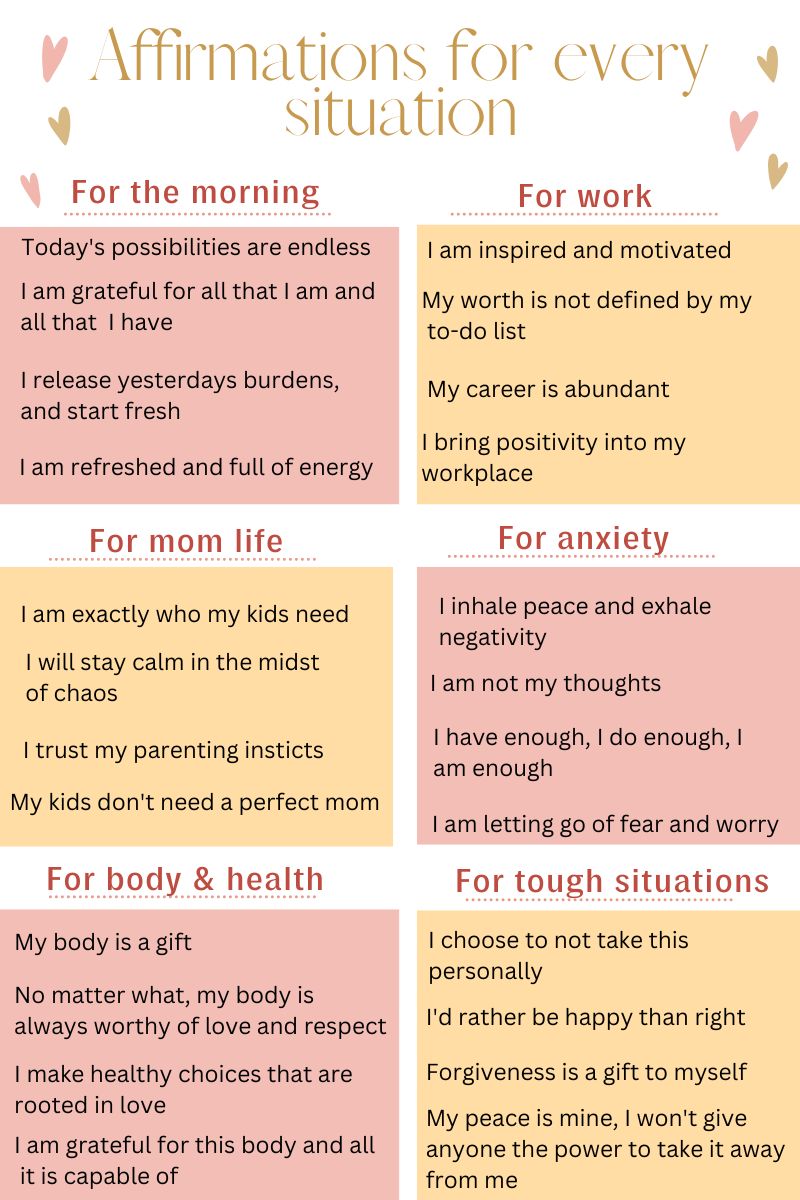
Monday Mindset: Affirmations For Every Situation

Consider this: “We think in words, and these words have the power to limit us or to set us free; they can frighten us or evoke our courage. Similarly, the stories we tell ourselves about our own lives eventually becomes our lives.”

Dan Baker, What Happy People Know

Try This: Affirmations. I used to roll my eyes at the idea of affirmations, but science has shown us that affirmations are in fact a way to help alter our internal dialogue, that will otherwise gladly tell us: we aren’t good enough, smart enough, we’ll fail etc. For many of us if we let our subconsciouses run wild they will chatter at us in negative and anxiety ridden tones. It takes work to change our narratives but one of the most powerful ways we can do that is through affirmations.

Below you’ll find affirmations for most situations! It can sound so silly when you first start saying them. But other ways I like to incorporate affirmations are:

  • Write it on a sticky note and put it on a mirror you look at daily
  • Pick one or two to say daily at a specific time (ie: waking up / going to bed / rocking your kid etc.)
  • Save an affirmation as the background on your phone, when you’re going into a tough situation or experience. It’s the perfect easy reminder to see some words that should bring you calmness or courage!
  • Save my PDF version with these affirmations!